



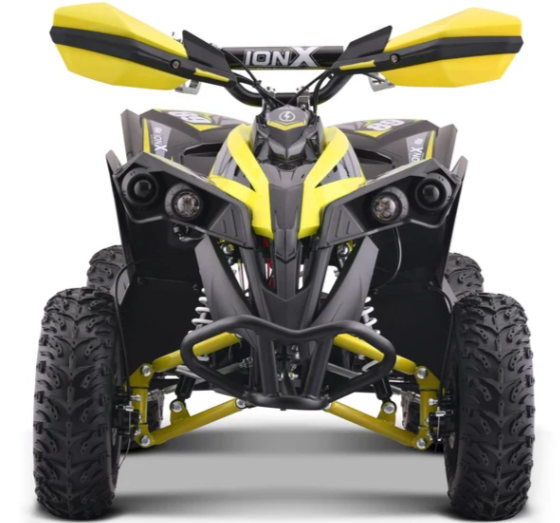
For riders looking for a more convenient and peaceful method to enjoy outdoor riding, electric quad bikes have grown in popularity. Compared to traditional fuel-powered options, electric power may provide quick acceleration, smooth operation, and fewer regular engine maintenance needs. However, an electric model’s motor and battery are not the only factors that affect its performance. Speed, control, energy consumption, and total riding range may all be greatly impacted by the ground under the wheels.
Riders may better plan their trips and maximise battery efficiency by knowing how various terrain impacts an electric quad.
The Significance Of Terrain For Electric Quad Bikes
Resistance varies depending on the surface. Compared to a quad going up a steep slope or through soft mud, a quad moving on level, solid terrain often needs less energy to maintain speed. The motor uses more battery energy when it has to generate higher torque.
Terrain should thus be a key factor for purchasers looking at Quad Bikes for Sale, along with battery capacity, engine power, vehicle size, suspension, and tyres. The requirements of a model designed for challenging off-road situations may vary from those of a model appropriate for comparatively level recreational locations.
Riding On Level, Sturdy Ground
An electric quad is usually best suited for terrain that is hard and smooth. The engine does not have to exert as much effort to keep the quad going since the tyres experience comparatively less rolling resistance.
Riders may be able to utilise available battery capacity more effectively and perform more consistently as a result. When opposed to frequent rapid acceleration and braking, maintaining a steady speed may also minimise needless energy usage.
However, there may be bumps, loose stones, or unforeseen difficulties on even reasonably flat terrain. Instead of concentrating just on increasing range, riders should constantly adjust their pace to visibility and surface conditions.
Steep Inclines And Hills
The engine must work against gravity while moving the weight of the vehicle and rider, which puts a lot more strain on an Electric Quad Bike while going uphill. Climbs that are longer or steeper may use more energy and cover less ground on a single charge.
The amount of energy used on an elevation may also be influenced by the rider’s weight, the equipment they are carrying, the state of their tyres, the temperature, and their riding style. When ascending, frequent, forceful acceleration may put more strain on the battery.
Although it usually takes less engine power to descend, motorcyclists still need to use caution. Regenerative braking technology may also be used by certain electric systems, depending on the vehicle’s architecture; however, this shouldn’t be expected for every model.
Wet Ground And Mud
Another problem caused by mud is that tyres may sink into the surface rather than roll easily over it. In order to continue moving ahead, the motor must then overcome more resistance.
When compared to riding over a dry, solid track, deep or sticky mud may significantly increase battery usage. Additionally, it may decrease traction, increasing the likelihood of extreme wheelspin. Efficiency may be further impacted by wheelspin as it consumes energy without generating comparable forward motion.
Additionally, cautious riding is especially crucial in wet circumstances. Regarding water exposure, cleaning, and suitable working conditions for electrical components, riders should adhere to the manufacturer’s instructions.
Loose Surfaces And Sand
Because the wheels continuously push against material that moves under them, sand, gravel, and other loose terrain might require more force. Because the tyres may sink and provide significant rolling resistance, soft sand is especially difficult.
Traction and efficiency may be affected by selecting the right tyres and keeping the right tyre pressure. Instead of making big tyre pressure adjustments on their own, riders should adhere to the manufacturer’s instructions.
Customers may also evaluate various electric quad models based on their intended usage with the assistance of specialised dealers like Quad Warehouse. Selecting an appropriate model may be made simpler by looking beyond the headline specs and taking into account the real riding location of the quad.
Conclusion
An electric quad’s performance is directly impacted by the terrain. While steep slopes, mud, sand, and rocky trails might put extra strain on the engine and battery, flat, solid ground often allows for more effective riding.
Riders should carefully consider where and how they want to utilise a model before selecting one. A more useful riding experience and better battery range management may be achieved by matching engine capabilities, battery capacity, tyres, suspension, and other elements to the planned terrain.